lunes, 10 de abril de 2017

The Top British Baby Names List: Our Favorite Picks!

The Top British Baby Names List: Our Favorite Picks!
The UK released its top baby names list, and Oliver and Amelia are still on top. But some favorites from across the pond aren't quite as popular in the U.S.

The United Kingdom at long last discharged its top infant names rundown, and Oliver Amelia still proved to be the best. (Nor was in the main 10 here in the U.S.— Oliver came in at number 32 and Amelia was number 15.) But shockingly, we don't see a great deal of hybrid between the U.S. furthermore, U.K. list. Names like Poppy and Alfie, which don't graph in the main 1000 here, are best 20 top choices over yonder.

Here are some of my top choices from over the lake that haven't exactly progressed toward becoming as prevalent here in the U.S.

Young lady Names


Florence
You can wager that stone demonstration Florence + the Machine is behind the new ubiquity of this name, right now number 26 on their rundown.

Thea
This abbreviated connection to Theodore positions close number 80 in the U.K., yet simply hit the main 1000 in the U.S. this year.

Ivy This plant is frequently connected with reliability—and makes an exquisite natural child name.

Lottie This short type of Charlotte hit the main 100 this year, even before the regal child name was declared. I'd hope to see it on the ascent now.

Eleanor
and Harriet This match of stunning stodgy works of art are next to each other on the U.K's. rundown, at numbers 60 and 61—yet scarcely make a swell here.

Freya The Scandinavian goddess' name recently began positioning here in the U.S. a year ago, however it's been a U.K. most loved for quite a while.

Kid Names


Oscar holds relentless close to the main 100 here in the U.S., yet it's a main 10 most loved in the U.K.

George It's nothing unexpected that George is proceeding with a major rush of fame, on account of the delightful illustrious enormous sibling—it climbed three spaces to the seventh spot on the infant names list in the U.K.

Ellis This Welsh variation on Elijah appeared in the main 100 on British outlines, however it's still back in the main 500 here.

Arthur Every year I battle for Arthur, a name with an enchanting vibe (it implies bear), and a consistent on the main 100 in the U.K. (It's just #306 here!)

Teddy and Rory We don't care for nicknamey names all the time in the U.S.–Teddy hasn't outlined in the main 1000, and Rory's quite recently inside the main 500 here, while they're both main 100 top choices in the U.K.

Let us know: What UK pearls do you cherish?

miércoles, 5 de abril de 2017

MacOS Sierra: best five things you have to think about Apple's new Mac programming

MacOS Sierra: best five things you have to think about Apple's new Mac programming
The free MacOS Sierra upgrade is available for almost any Mac from late 2009.

Siri arrives on the Mac, you can now duplicate things between various Mac and iOS gadgets, your desktop now lives in the cloud – and everything can be selected

OS X is dead. Long live macOS. Apple's new form of its Mac working framework – Sierra – will be accessible for download later today.

The free redesign is accessible for any Mac from late 2009 and will be accessible by means of the Mac App Store later today. While some might need to hold off instantly refreshing, given the current issue with early updates, here are five new things to be found by the individuals who do wish to change to macOS Sierra.

1. Siri

The greatest change for Sierra other than the name is Siri. A similar voice associate from the iPhone and iPad is currently on the Mac with comparative elements and deficiencies. It can discover documents for you utilizing common dialect as presented with El Capitan, set arrangements, check spellings, play music and disclose to you the climate, however the amount you utilize it relies on upon where you work: partners in your open-arrangement office wouldn't love the way that you just began conversing with your PC.

2. All inclusive clipboard

Have you at any point needed to glue something between two Macs or a Mac and an iPhone or iPad? Presently you can. Simply duplicate something on one machine, hit glue on the other and hold up. Some of the time it takes a while, contingent upon how great your association is, however it works shockingly well. It works for content, pictures and most different things you may duplicate to the clipboard.

3. iCloud drive desktop

While some are sorted out and store every one of their records in deliberately composed envelopes, numerous simply have everything dumped on the desktop and bolted on a solitary machine. iCloud Drive desktop can now match up documents and envelopes on the desktop amongst machines and to iPhones or iPads, so everything not composed is open from various machines.

4. Everything is in a tab now

The selected interface kickstarted by programs has now come to pretty much everything in Sierra. From content managers to photographs altering, planning applications and email, hitting the "Blend All Windows" choice under the Window drop down in the status banish combines the windows from one application into one selected interface. Not all things support it instantly, and some that do have crazy executions, however in the event that you needed tabs wherever on a Mac, now's your shot.

5. Apple Pay, iOS 10 elements and then some

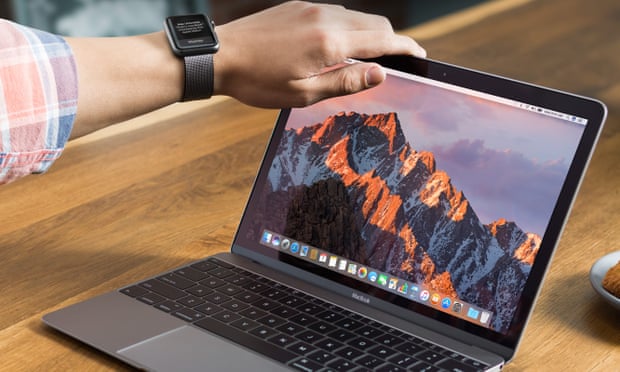
Beside huge Mac highlights, MacOS Sierra additionally includes similarity with the majority of the new components from iOS 10. Presently you can pay for things utilizing your Touch ID sensor on your iPhone on the web, you can send favor talk things with iOS 10 clients in Messages, see recordings taken care of by the Quicktime Player in a drifting window, and even open your Mac utilizing an Apple Watch, in the event that you possess one. Apple Music in iTunes now looks more like the iOS form as well, and the Memories highlight from the iOS Photos application is presently in the MacOS Sierra Photos application. MacOS additionally guarantees to free up some space on your Mac by putting away unused records inside iCloud drive, however how much space it can free up relies on upon what sorts of documents are taking up your hard drive.

martes, 4 de abril de 2017

Five harmed in chlorine gas spill at Apple server farm

Five harmed in chlorine gas spill at Apple server farm
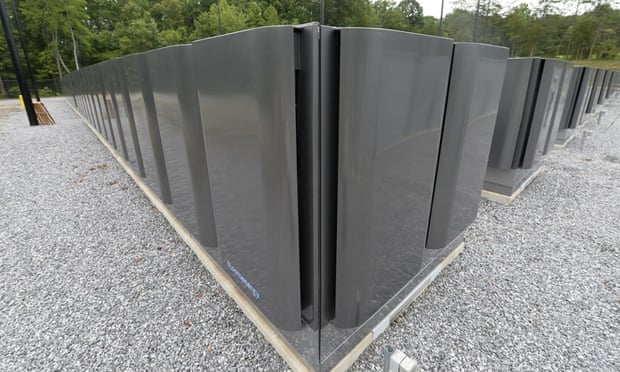
Running entirely on renewable energy, the Apple data centre in Maiden, North Carolina, reduces energy consumption and greenhouse emission.

Laborers treated at the scene in North Carolina by paramedics before being taken to healing facility after presentation to toxic exhaust

Five individuals have been taken to healing facility after a chlorine gas spill at Apple's extensive server farm in Maiden, North Carolina.

The building was emptied by the risky materials reaction group, and five laborers were dealt with on location before being taken to an adjacent doctor's facility. Every one of the five were later released.

Chlorine is utilized as a cleaning operator for the water frequently utilized as a part of fluid cooling frameworks for PCs and servers. Be that as it may, when presented to air in concentrated amounts it vanishes, making chlorine gas, which has been utilized as a synthetic weapon in the main world war and a few consequent clashes.

Chlorine gas assaults the lungs, responding with the water in mucosal layers, making hydrochloric corrosive which chafes the lung tissue and causes liquid develop, shortness of breath and inevitable suffocating.

The specialists were dealt with for unsteadiness and shortness of breath, and given oxygen at the scene, as indicated by reports.

"Five specialists at our Maiden server farm were taken to a neighborhood healing center after conceivable presentation to exhaust, which may have been discharged amid a spill of a concoction used to clean the cooling frameworks," said Apple in an announcement. "The spill was immediately contained and represents no risk to any other individual at the office."

The server farm in North Carolina is one of a few that Apple works utilizing sustainable power source and, at 183 sections of land, is one of its biggest. It is at present being extended and is entrusted with taking care of iCloud, iMessage and iTunes information, controlled by a 50 megawatt sun oriented power plant.

Apple likewise utilizes sun powered power inside parts of its generation line, including the sapphire screen producing plant once in the past possessed by GT Advanced. The plant in Arizona endured a fire a week ago segregated to the sunlight based exhibit on its rooftop.

Solu: the Finnish pocket PC that needs to assume control over the world

Solu: the Finnish pocket PC that needs to assume control over the world
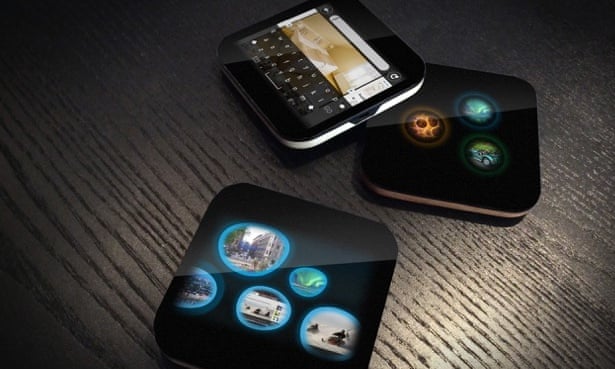
Solu is four inches wide and has an edge-to-edge touchscreen, but it’s not intended to be a mobile phone replacement.

Three aggressive architects from Finland are offering to change individualized computing with another convenient PC and working framework

PCs, says business person Kristoffer Lawson, haven't changed much in 20 years. It's as yet a container, a screen and, in case you're utilizing a desktop, a console.

However, Lawson believes that the time of distributed computing merits its own sort of figuring gadget. Compact, yet more intense than a portable, intended to be connected to any desktop screen and with another sort of working framework that associates all the more smoothly to your contacts. Furthermore, at a dispatch in San Francisco on 15 October, that is the thing that Lawson and whatever remains of the Solu group divulged.


Solu: the Finnish pocket PC that needs to assume control over the world
Solu is sold through Kickstarter for €349.

Solu may resemble a beverages liner yet don't put your espresso on it; this is a four-inch wide square of bended, wood-encased PC with an edge-to-edge touch screen. Inside is a capable 2.3GHz processor, battery and Wi-Fi capacity. It can be utilized all alone or combined with a console and a show up to a determination of 4K. At the point when matched along these lines, the Solu goes about as an info gadget rather than a mouse.

"This is something I've been considering for a long time, however in those days the innovation that would have enabled us to do this would have been so intricate and costly – especially the equipment – that it would have been outlandish," says Lawson in a muddling Belfast-Finnish intonation.

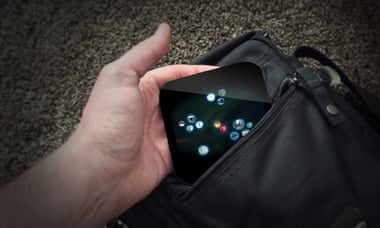
He depicts Solu as "the littlest universally useful PC at any point made". At around 10cm squared with a thickness of 12mm it is without a doubt little – more like a cell phone than a PC, yet with handling punch.

Lawson has been chipping away at Solu's equipment and working framework throughout the previous 12 months, with a group that incorporates the previous Nordic executive of TMF Group Javier Reyes and Pekka Nikander, who established IT security consultancy Nixu.

The group was, says Lawson, pulled in to the jumping desire of the Solu venture: to disturb the individualized computing foundation. "At the point when the test is sufficiently huge, the shrewd individuals will get roused."

Lawson draws specifically on experience building Holvi, a straightforward web based keeping money and bookkeeping administration. Like keeping money, individualized computing is a market that has been overwhelmed by significant players like Microsoft and Apple for quite a long time. The portable insurgency has given us figuring power moving, yet the desktop staple – especially the UI – has stayed unaltered.

Lawson's greatest fuss with today's PCs is "the way gravely they utilize the web as a major aspect of their entire experience".

"Yes we have email yet despite everything we're battling with reinforcements, hard drive space and downloading and introducing applications," he says. "The entire web is not a characteristic piece of the PC itself. On the off chance that you come up short on nearby assets, you're screwed."

With Solu, the equipment is connected specifically to a cloud administration the group has worked, with server farms situated in Finland. The cloud gives the client capacity to scale up, while the nearby gadget goes about as a savvy reserve with a limit of 32GB.

The conspicuous correlation is Google's Chromebook, however Lawson brings up that this contender "is essentially only a web program" and the "desktop experience is to a great degree restricted". Solu, then again, is intended to work disconnected. Any progressions made disconnected are matched up when the gadget goes on the web.

Solu: the Finnish pocket PC that needs to assume control over the world
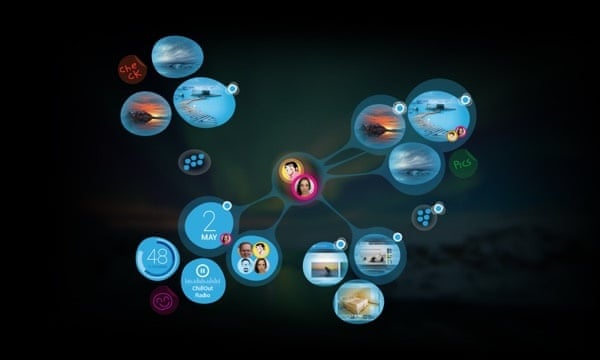
Solu’s operating system uses the representation of nodes rather than linear lists of options.

Solu's interface is striking. It totally shuns the scientific data design of Windows and OS X – where substance is orchestrated by record sort or capacity area – for something more visual. Joint effort spaces are introduced as a progression of air pocket like hubs associated together like neurons: messages, introductions, pictures and partners are altogether spoken to similarly in a similar space.

"There are no windows, no menu bars, no symbols. All that leaves. The UI is worked around cooperating in a web associated condition. Say farewell to the PC. This is altogether in light of coordinated effort," says Lawson.

Notwithstanding the abnormal interface there's an unordinary, Spotify-like plan of action. The client pays a settled month to month expense on top of the underlying price tag – around $20 (£13) a month – as an end-result of a boundless measure of capacity and access to applications. The membership income is then dispensed to designers of applications in light of utilization instead of irregular downloads.

Solu is soliciting a great deal from its clients. They have to get tied up with new equipment, new programming and another method for paying for and cooperating with substance. The interface individuals have developed to use throughout the most recent 30 years won't not be instinctive, but rather it is presently well-known. While it appears to be natural, almost no's comfortable about associating with Solu.

At the point when the gadget was exhibited in front of an audience at the dispatch occasion in San Francisco this week, it turned out to be certain that the innovation had getting teeth issues – credited unconvincingly to the setting's frail Wi-Fi. Head of plan Joona Kallio conceded after the dispatch introduction that a portion of the points of interest – including particular membership costs and battery life announcing – are as yet being tweaked ahead of time of the assessed sending date of May 2016.

Notwithstanding these difficulties, Lawson remains to a great degree bullish. He's says he's not hoping to be purchased by Google for $40m. "We need to incorporate it with a genuine organization with a plan of action."

He alluded to a forecast by investor Fred Wilson, who said that by 2020 the main three innovation organizations will be Facebook, Google and something else – not Apple, the biggest organization on the planet by market capitalisation. "We'd get a kick out of the chance to see ourselves in that main three," Lawson says.

Forrester innovation expert J P Gownder poured a little rain on the parade, bringing up that cell phones are ending up noticeably perpetually refined, and prevailing working frameworks, for example, Windows are advancing crosswise over gadgets.

"It's difficult to envision Solu taking off in a period when versatile working frameworks (iOS, Android) offer so much esteem, and when Windows 10 now keeps running over all shape variables. The odds of another biological system rising around this gadget appear to be thin," he said.

lunes, 3 de abril de 2017

What is 'sheltered harbor' and why did the EUCJ simply pronounce it invalid?

What is 'sheltered harbor' and why did the EUCJ simply pronounce it invalid?
EUCJ ruling could affect the way US companies operate in Europe and where they can send EU citizens’ data.

European Court of Justice standards 2000's information security concurrence with US invalid, yet will that prevent Facebook from exchanging your EU information to America?

The European Court of Justice has decided that the "protected harbor" understanding that permitted the exchange of European subjects information to the US is no longer substantial. Yet, what does that mean for the Facebooks, Googles and Microsofts of this world?

In a two-year-old case compelled to the EU's most elevated court by Austrian security campaigner Max Schrems, the EUCJ decided that the European Commission's trans-Atlantic information insurance understanding that went into drive in 2000 was invalid since it doesn't satisfactorily ensure buyers in the wake of the Snowden disclosures.

What was the 'protected harbor' understanding?

EU security law precludes the development of its residents' information outside of the EU, unless it is exchanged to an area which is regarded to have "satisfactory" protection assurances in accordance with those of the EU.

The sheltered harbor assention that was made between the EC and the US government basically guaranteed to ensure EU nationals' information if exchanged by American organizations to the US.

It permitted organizations, for example, Facebook to self-affirm that they would secure EU residents' information when exchanged and put away inside US server farms.

Patrick Van Eecke, co-leader of the worldwide security hone DLA Piper stated: "The benefit of safe harbor was that it worked as a sort of 'one stop shop' taking into consideration the fare of individual information to the US, whoever in Europe it originated from, without the need to request assent, or to go into reciprocal understandings, again and again."

Will information still be exchanged to the US?

Since the 2000 assention has been called invalid, American organizations – including Google, Facebook, Apple and Microsoft – can no longer depend on self-affirmation and must try to strike "demonstrate contract provisos" for each situation. These understandings approve the exchange of information outside of Europe.

Monique Goyens, executive general of the European Consumer Organization stated: "fundamentally, if Facebook, Google et al. wish to keep sending Europeans' own information over the Atlantic they will simply need to ensure a sufficient level of security in accordance with EU rules."

The effect on substantial US innovation organizations and their operations inside the EU is probably going to be restricted to a lot of printed material. Many will as of now have demonstrate contract conditions effectively drawn up. Others might be compelled to stop the exchange of information to the US until they have.

Numerous US organizations have built up or are building EU-based server farms to deal with information for EU subjects, including Facebook, Apple and Google. The inquiry organization, for example, records four server farms inside Europe, incorporating one in Ireland.

Shouldn't something be said about Facebook?

For Facebook, which has been put at the focal point of this case by Schrems, the choice implies that the Irish information security specialist (DPA) will be compelled to research the Austrian's cases and Facebook's information insurance rehearses.

"[The Irish DPA must]decide whether ... exchange of the information of Facebook's European supporters of the US ought to be suspended in light of the fact that that nation does not manage the cost of a sufficient level of assurance of individual information," the EUCJ said.

Will I see anything diverse?

The effect on clients in the here and now is probably not going to be self-evident. The disintegration of the understanding will, in principle, guarantee better information assurance for clients' close to home data going ahead. It might likewise help prevent the US government from having the capacity to access client information from the EU.

Locales and administrations, for example, Facebook are very probably not going to be disturbed to any important level. However, it might open the way to further tests, protestations and claims from clients and information controllers.

Shouldn't something be said about cloud administrations?

The organizations most influenced are probably going to be littler, less monetarily and innovatively capable organizations. Many utilize US-based cloud administrations to store or process information that they couldn't do themselves. It is the 21st century likeness outsourcing.

Those organizations should submit to an indistinguishable frameworks from Facebook and Google, concurring model contract provisos and guaranteeing that the administration they are utilizing, for example, Amazon's web administrations, additionally agrees to information assurance directions.

In spite of being standard and basically settled understandings, getting them affirmed before exchanging information will be both a budgetary and authoritative weight.

Will another protected harbor understanding be required?

The decision did not come totally unexpectedly – it's an approval of the EU's Advocate General's sentiment on Safe Harbor – yet was not expected so soon.

Another sheltered harbor understanding is right now being consulted between the EU and US, and has been in arrangement throughout the previous two years, taking after the Snowden disclosures.

The EU has been attempting to constrain the US government's entrance to EU residents' information put away in the US and to enable EU subjects to sue US organizations in US courts should they abuse their information.

The EU has been utilizing the risk of vetoing future exchange understandings as a stick, yet an assention presently can't seem to be struck. The new administering is probably going to light a fire under the procedures as another assention is expected to help grease up global exchange administrations.

A few investigators see the EUCJ's decision as prone to hurt, not help, the new safe harbor arrangements.

Van Eecke: "By tweaking and calibrating the current safe harbor framework and including a layer of strong authorization we could go to a workable arrangement. This is precisely what the administration authorities are taking a shot at, yet which now dangers to be hindered by the court's choice."

What happens in the event that one can't be made?

Ought to the US endeavor to crash another protected harbor understanding, it is US organizations intending to grow past US fringes that are probably going to be affected. European organizations may likewise observe access to cutting edge cloud administrations limited, in spite of the fact that the move to server farms arranged in Europe will facilitate the circumstance.

Meanwhile encryption may hold the response to keeping up information exchange while another assention is set up.

Nigel Hawthorn, from cloud security organization Skyhigh Networks, stated: "Associations need to research advancements, for example, encryption or hazard being dragged through the courts by protection backers, clients or representatives. Tokenising or scrambling information streams before they are sent to the cloud, and keeping the keys on commence, implies these issues vanish. There is no "individual" information in the cloud benefit once it has been encoded or tokenised."